
21. Binary Introduction (4:11)
- Why do we need to know binary?
- Subnetting
- Access Lists - when you want to permit or deny traffic based on IP address
- etc…
- A binary digit is called a bit.
- There are two possible states in a bit, usually expressed as 0 and 1.
- Binary = 0 & 1
22. Binary Math
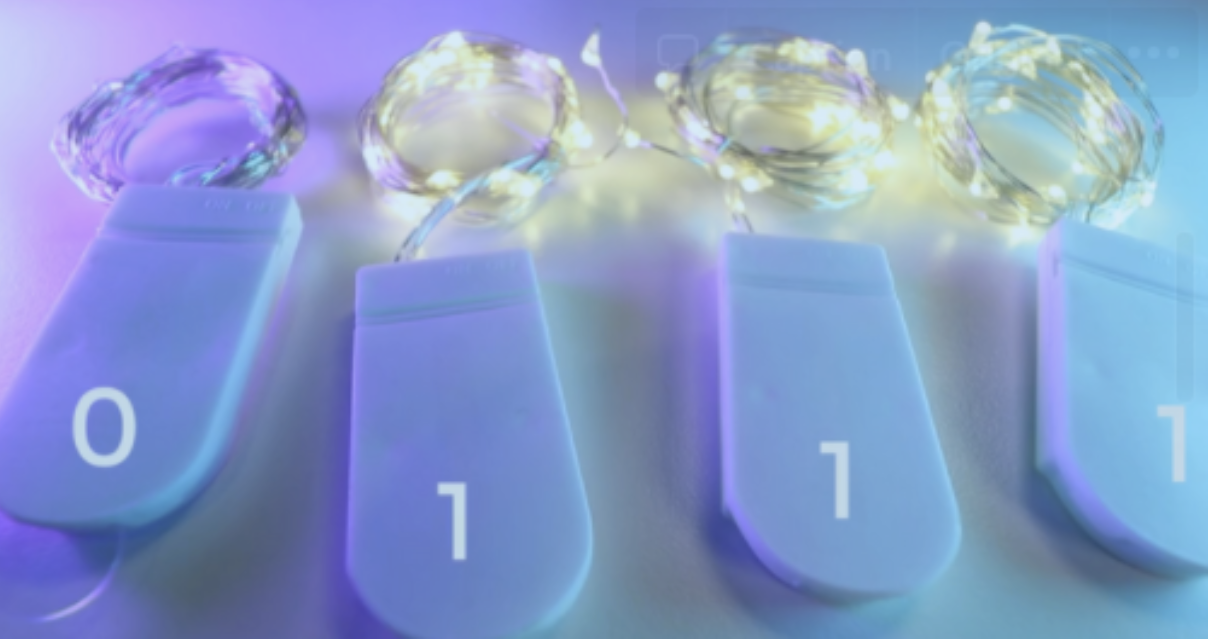
2 states = ON or OFF
4 Cables
16 Different combinations are possible.
2 states + 4 cables = 24 =16$ combinations / binary values
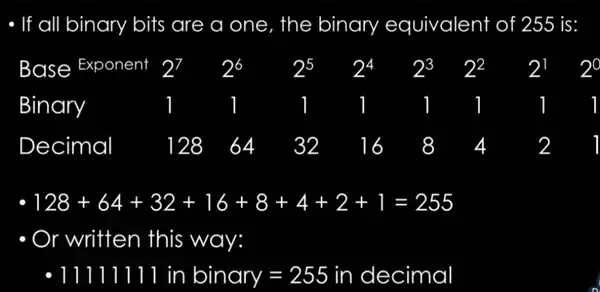
Octet = 8 Binary Values
2022-07-03^7=128$
2022-07-03^6=64$
2022-07-03^5=32$
2022-07-03^4 = 16$
2022-07-03^3=8$
2022-07-03^2=4$
2022-07-03^1=2$
2022-07-03^0=1$
0000 0001 = 1 in decimal
1100 0000 = 192 in decimal
1111 1101 = 253 in decimal
1111 1111 = 255 in decimal
How to calculate Decimal to Binary:
Substraction method (decimal to binary):
132 = 132-128(1)-4(1) = 10000100
Divide method:
e.g. 132
132/2 = 66 (0)
66/2 = 33 (0)
33/2 = 16.5 (1)
16/2 = 8 (0)
8/2 = 4 (0)
4/2 = 2 (0)
2/2 = 1 (0)
1/2 = 0.5 (1)
And then Answer is from Bottom to Top: 13 = 1000 0100 in binary
23. Binary Conversion Examples
24. Converting IP Addresses to Binary
IP Address = 4 octets / 32 bit
1 octet = 8 binary values = 8 bits
10.129.16.123 = 0000 1010.1000 0001.0001 0000.0111 1011
Quiz 1: Quiz
223=11011111
249=11111001
253=11111101
128=10000000
11000001=128+64+1=193
11101101=128+64+32+8+4+1=192+45=237
Flashcards/Active Recall Q+A:
Why do we need to know binary? #card
- Binary is part of subnetting masks, IP addressing, Access Lists.
- Thus if you want to configure network and know what is going on. ou then need to know binary.
- IP addresses consist of 32 binary values, or in other words 32bits. Which are separated into 4 different octets. 1 octet = 8 bits/ 8 binary values
What is the binary equivalent of decimal 255? #card
- 1111 1111
What is the binary equivalent of decimal 128? #card
- 1000 0000
What is the decimal equivalent of 11000001? #card
- 128+64+1= 193